Montgomery County Dog Registration Information
Service Dogs and Emotional Support Animals in Montgomery, Illinois
If you’re asking where do I register my dog in Montgomery County, Illinois for my service dog or emotional support dog, the key thing to know is that “registration” usually means a local dog license (often tied to a current rabies vaccination). In Montgomery County, licensing and rabies enforcement can involve county animal control and also your city or village office—especially if you live inside city limits.
This page explains how a dog license in Montgomery County, Illinois typically works, how rabies requirements affect licensing, and the difference between a dog license, a service dog’s legal status, and an emotional support animal (ESA).
Where to Register or License Your Dog in Montgomery County, Illinois
Because licensing is often handled at the county or city level, below are several example official government offices that residents in Montgomery County, Illinois commonly use for dog licensing, rabies tag/registration, and animal control questions. If you live inside a city’s corporate limits, your city clerk/city hall may issue local dog tags even when the county also enforces rabies registration.
Montgomery County Animal Control
| Address | 11252 N. 9th Ave, Hillsboro, IL 62049 |
|---|---|
| Phone | (217) 532-3334 |
| mcaco@montgomerycountyil.gov | |
| Office hours | Mon – Fri: 9am – 1pm; Evenings/Weekends/Holidays: By appointment only |
| Notes | County animal control office for rabies registration/tag questions, enforcement, and county animal ordinances. |
City of Litchfield — City Clerk’s Office
| Address | 120 E. Ryder Street, Litchfield, IL 62056 |
|---|---|
| Phone | 217-324-2022 |
| Office hours | Monday – Friday, 8:00 a.m. to 5:00 p.m. |
| Notes | City clerk offices often issue local licenses/tags and other city-issued licenses/permits for residents inside city limits. |
City of Hillsboro — City Clerk (City Hall)
| Address | 447 S Main Street, Hillsboro, IL 62049 |
|---|---|
| Phone | 217-532-5566 |
| Fax | 217-532-5567 |
| Office hours | Not listed |
| Notes | If you live in Hillsboro city limits, contact the city clerk to confirm whether city dog tags/fees are required in addition to county rabies registration. |
Montgomery County Health Department (Rabies & Public Health Questions)
| Main office | 11191 IL Rt. 185, Hillsboro, IL 62049 |
|---|---|
| Phone (main) | (217) 532-2001 |
| Fax | (217) 532-2089 |
| Satellite office | 317 West Union, Litchfield, IL 62056 |
| Phone (satellite) | (217) 324-3430 |
| Office hours | Not listed |
| Notes | Public health is commonly involved in rabies exposure guidance; dog licensing itself is typically handled by animal control and/or local municipalities. |
How to choose the right office (quick guide)
- If you’re unsure where to register a dog in Montgomery County, Illinois: start with Montgomery County Animal Control and ask whether your address is covered by county-only rabies registration or whether your city issues its own dog license/tag.
- If you live inside Litchfield or Hillsboro city limits: call the city clerk to confirm whether you must purchase a city dog tag, and how it relates to county rabies registration.
- If your questions involve rabies exposure or bite incidents: the Montgomery County Health Department may be involved, but you’ll still typically handle licensing/tagging through animal control or the city.
Overview of Dog Licensing in Montgomery County, Illinois
What “dog registration” usually means
In everyday terms, “registering your dog” usually means getting a dog license in Montgomery County, Illinois (or a city dog tag), which helps local authorities verify ownership and rabies compliance. Depending on where you live, you may hear it called a “license,” “registration,” or “rabies tag.” The main goals are public health (rabies control), animal control enforcement, and reunification of lost pets.
Who enforces licensing and rabies compliance
In Montgomery County, rabies control and registration/tag requirements are addressed through county animal control rules and enforcement. The county’s animal control ordinance includes rabies-control provisions, including required vaccination intervals and a requirement to obtain a serially numbered registration tag after rabies vaccination. County animal control also lists office contact information and public hours for residents who need guidance on registration and enforcement questions.
Rabies vaccination requirement (what you should expect)
Rabies vaccination is a core requirement tied to licensing. County rules generally require dogs (and cats) of a certain age to be inoculated against rabies by a licensed veterinarian and documented on a certificate. After vaccination, owners are typically expected to obtain the county registration tag and keep records available. If you’re trying to complete an animal control dog license Montgomery County, Illinois process, expect to show your current rabies certificate or other proof of vaccination.
How Dog Licensing Works Locally in Montgomery County, Illinois
Step 1: Confirm whether you’re in a city/village limit or unincorporated county
A common point of confusion is that licensing is often handled locally: some residents license through a county animal control office, while others are required to obtain a city dog tag through their local city clerk (and sometimes still comply with county rabies registration rules). Your exact steps can depend on whether your home address is inside an incorporated municipality (like Hillsboro or Litchfield) or in an unincorporated part of the county.
Step 2: Keep your rabies certificate current
In practice, you will usually start at your veterinarian. After your dog receives a rabies vaccination, you will receive a signed rabies certificate. Local government offices commonly use that certificate to issue a tag/registration. Montgomery County’s ordinance language describes rabies inoculation requirements and indicates that owners of animals residing within the county must procure a serially numbered registration tag after rabies vaccination.
Step 3: Apply for the tag/license and pay the fee (if applicable)
When you contact the correct office, they may ask for proof of rabies vaccination and a fee that depends on whether the dog is spayed/neutered and the license term (for example, 1-year vs multi-year). Montgomery County documents list different fees for sterile vs intact animals and different registration durations. If you have questions about fees for a dog license in Montgomery County, Illinois, confirm the current schedule directly with the issuing office because fees and forms can change.
Step 4: Display the tag and keep records
Once issued, keep the tag on your dog’s collar and store your paperwork (rabies certificate, receipt, and any registration certificate). Having the tag visible can help if your dog is found or if animal control needs to confirm compliance during an investigation.
If your dog is a service dog or ESA
Your dog’s training or assistance role does not automatically replace local licensing. In most cases, service dogs and ESAs still must comply with local rabies vaccination and dog-tag requirements. The difference is in what rights the animal has (public access for service dogs; housing-related rules for ESAs), not whether the dog must follow basic vaccination and licensing rules.
Service Dog Laws in Montgomery County, Illinois
A local dog license is not the same thing as service dog status
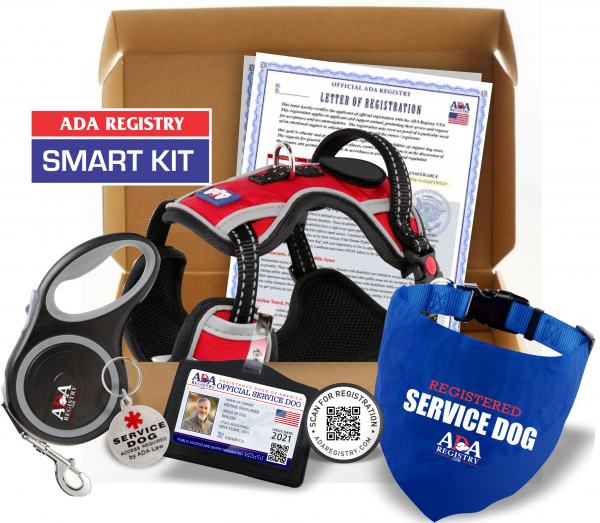
A dog license in Montgomery County, Illinois is a local government registration/tag system connected to rabies and animal control rules. A service dog, by contrast, is defined by the dog’s trained work or tasks to assist a person with a disability. Service dog status comes from the dog meeting the legal definition and training expectations—not from buying an online certificate, vest, or “registration.”
What you can be asked in public places
In many public settings, staff may be limited to asking whether the dog is required because of a disability and what work/tasks the dog is trained to perform. They generally should not demand medical records or a special government “service dog registration,” because that’s not how service dog status is established.
Licensing, rabies tags, and practical compliance
Even when a dog is a legitimate service dog, local animal rules still apply (rabies vaccination, leash laws where required, and local tag/licensing). If you’re wondering where to register a dog in Montgomery County, Illinois specifically for a service dog, the answer is typically: register the dog the same way you would any other dog (through county animal control and/or your municipality), and maintain your training documentation privately for your own records.
Emotional Support Animal Rules in Montgomery County, Illinois
An ESA is not a service dog
Emotional support animals provide comfort simply by being present, but they are not trained to perform specific tasks in the way a service dog is. That distinction matters. An ESA may be relevant for certain housing situations, but an ESA does not automatically have the same public access rights as a service dog in restaurants, stores, or other public places.
Licensing and rabies compliance still apply
If you have an emotional support dog, you should still plan on obtaining a local license/tag and complying with rabies vaccination rules. If you’re searching for animal control dog license Montgomery County, Illinois information for an ESA, the steps are usually identical: keep a current rabies certificate and contact the correct local issuing office.
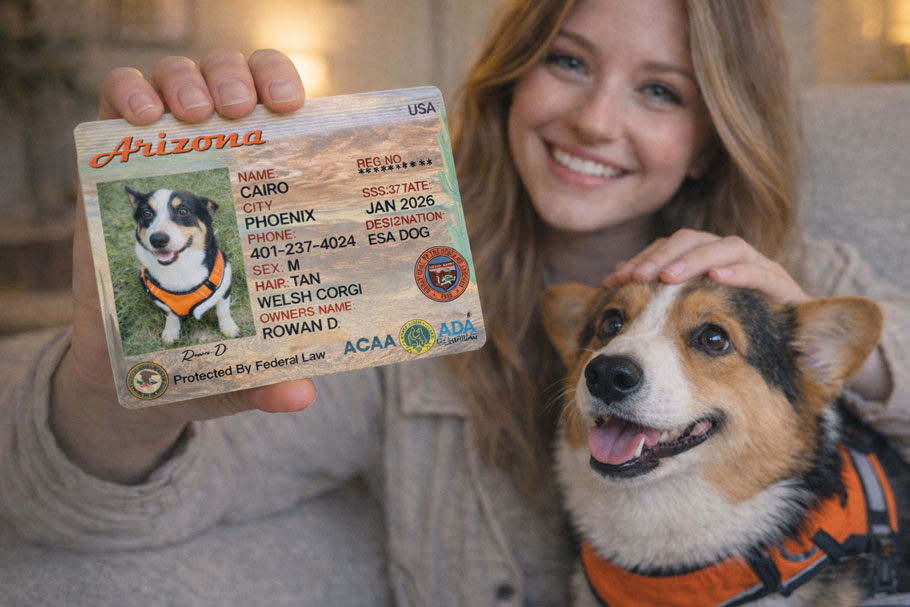
Avoid third-party “registrations”
Many websites sell ESA “registrations,” but those products are not the same as a local dog license and typically are not required (or accepted) by government offices. What matters for licensing is your rabies documentation and local tag requirements; what matters for ESA housing requests is typically proper documentation from a qualified professional (as applicable) and compliance with the relevant housing process.
Frequently Asked Questions
Start with Montgomery County Animal Control for county rabies registration/tag guidance and enforcement questions. If you live inside an incorporated city (such as Hillsboro or Litchfield), also contact your city clerk/city hall to confirm whether the city issues its own dog tag and what they require. Service dog or ESA status does not usually change where you obtain your local license/tag.
In other words, where to register a dog in Montgomery County, Illinois is usually the same place you would register any dog—county animal control and/or your municipality—while service dog or ESA rules affect rights and accommodations, not the licensing counter you use.
Most offices will ask for proof of current rabies vaccination (a rabies certificate signed by a licensed veterinarian). Many jurisdictions also require basic owner information and payment of the applicable fee. Some offices may ask whether the dog is spayed/neutered to determine the correct fee category.
Generally, no. A service dog’s legal status is based on the dog being trained to perform tasks for a person with a disability. A local dog license is still required where applicable, but it is not the same as “registering” a service dog for public access.
Typically, no. ESAs are generally treated differently than service dogs in public spaces. ESAs may be relevant in certain housing contexts, but they do not automatically have the same public access permissions as trained service dogs.
This happens in many areas because licensing is handled locally. You may need to comply with both: a city dog tag (issued by the city clerk/city hall) and a county rabies registration/tag process (coordinated through animal control). Call your city clerk and Montgomery County Animal Control to confirm which applies to your address and whether one tag satisfies both requirements.
Disclaimer: Licensing requirements and office locations may change. Residents should verify details with their local animal services office within Montgomery County, Illinois.
Register A Dog In Other Illinois Counties
Select your county below to get started with your dog’s ID card. Requirements and license designs may vary by county, so choose your location to see the correct options and complete your pup’s registration.
- Adams County Dog Registration
- Alexander County Dog Registration
- Bond County Dog Registration
- Boone County Dog Registration
- Brown County Dog Registration
- Bureau County Dog Registration
- Calhoun County Dog Registration
- Carroll County Dog Registration
- Cass County Dog Registration
- Champaign County Dog Registration
- Christian County Dog Registration
- Clark County Dog Registration
- Clay County Dog Registration
- Clinton County Dog Registration
- Coles County Dog Registration
- Cook County Dog Registration
- Crawford County Dog Registration
- Cumberland County Dog Registration
- DeKalb County Dog Registration
- DeWitt County Dog Registration
- Douglas County Dog Registration
- DuPage County Dog Registration
- Edgar County Dog Registration
- Edwards County Dog Registration
- Effingham County Dog Registration
- Fayette County Dog Registration
- Ford County Dog Registration
- Franklin County Dog Registration
- Fulton County Dog Registration
- Gallatin County Dog Registration
- Greene County Dog Registration
- Grundy County Dog Registration
- Hamilton County Dog Registration
- Hancock County Dog Registration
- Hardin County Dog Registration
- Henderson County Dog Registration
- Henry County Dog Registration
- Iroquois County Dog Registration
- Jackson County Dog Registration
- Jasper County Dog Registration
- Jefferson County Dog Registration
- Jersey County Dog Registration
- Jo Daviess County Dog Registration
- Johnson County Dog Registration
- Kane County Dog Registration
- Kankakee County Dog Registration
- Kendall County Dog Registration
- Knox County Dog Registration
- Lake County Dog Registration
- LaSalle County Dog Registration
- Lawrence County Dog Registration
- Lee County Dog Registration
- Livingston County Dog Registration
- Logan County Dog Registration
- Macon County Dog Registration
- Macoupin County Dog Registration
- Madison County Dog Registration
- Marion County Dog Registration
- Marshall County Dog Registration
- Mason County Dog Registration
- Massac County Dog Registration
- McDonough County Dog Registration
- McHenry County Dog Registration
- McLean County Dog Registration
- Menard County Dog Registration
- Mercer County Dog Registration
- Monroe County Dog Registration
- Morgan County Dog Registration
- Moultrie County Dog Registration
- Ogle County Dog Registration
- Peoria County Dog Registration
- Perry County Dog Registration
- Piatt County Dog Registration
- Pike County Dog Registration
- Pope County Dog Registration
- Pulaski County Dog Registration
- Putnam County Dog Registration
- Randolph County Dog Registration
- Richland County Dog Registration
- Rock Island County Dog Registration
- Saline County Dog Registration
- Sangamon County Dog Registration
- Schuyler County Dog Registration
- Scott County Dog Registration
- Shelby County Dog Registration
- St. Clair County Dog Registration
- Stark County Dog Registration
- Stephenson County Dog Registration
- Tazewell County Dog Registration
- Union County Dog Registration
- Vermilion County Dog Registration
- Wabash County Dog Registration
- Warren County Dog Registration
- Washington County Dog Registration
- Wayne County Dog Registration
- White County Dog Registration
- Whiteside County Dog Registration
- Will County Dog Registration
- Williamson County Dog Registration
- Winnebago County Dog Registration
- Woodford County Dog Registration